How to Choose a Cat Breed: 7 Questions for Your Home
Compare cat breeds by time, grooming, shedding, activity, household needs, and the individual cat before you choose.
Updated
Choosing a cat should start with your daily routine, care capacity, and the needs of the individual cat. Breed profiles can help you narrow questions about size, coat, activity, and household fit, but no label can promise a particular personality.
Use the seven questions below to compare cat breeds for your lifestyle, then meet the cat and ask its current caregiver about ordinary behavior and care.
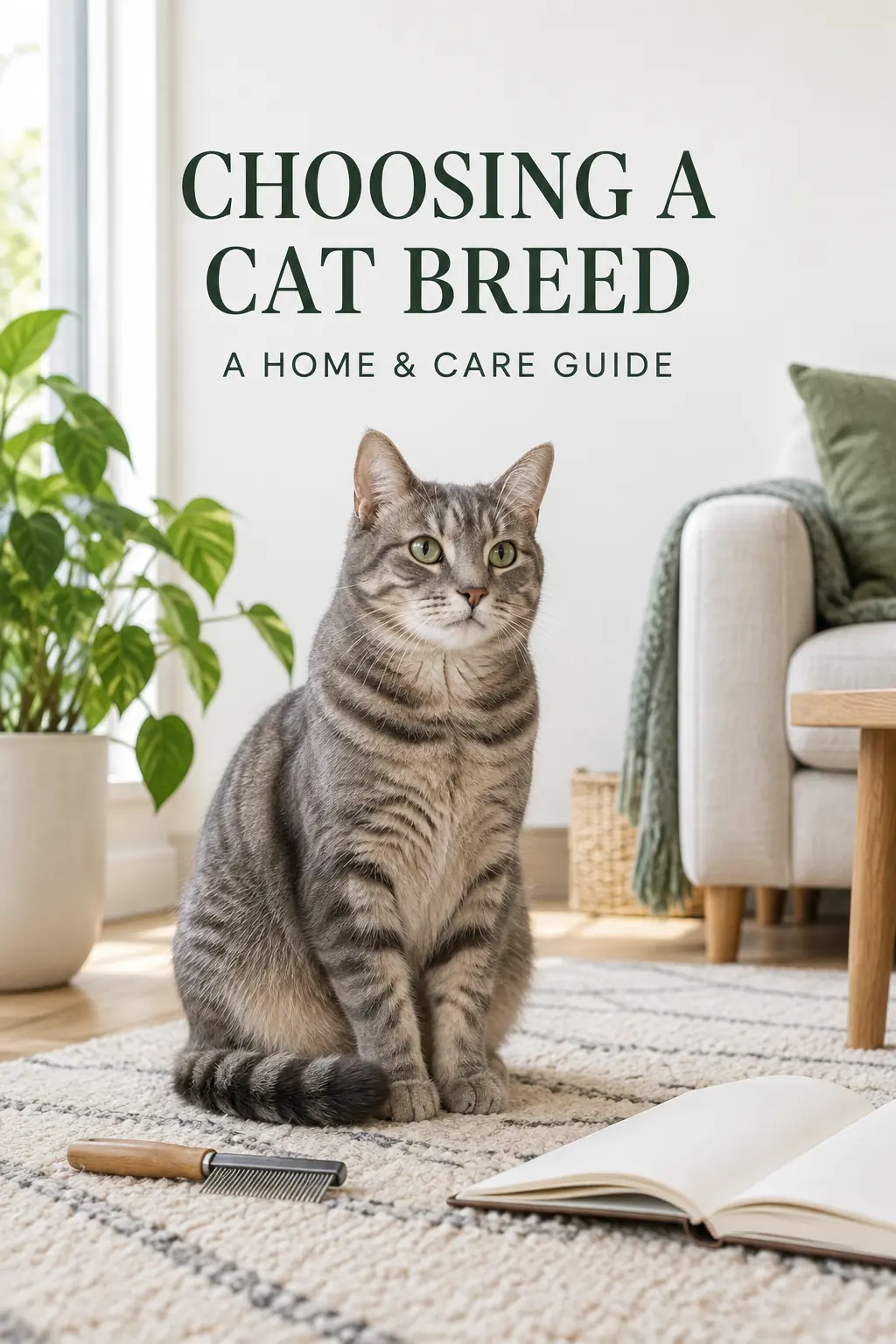
1. How much time can you give a cat each day?
Think about a normal week, not the week you hope to have. Cats need reliable meals, a clean litter area, play or other enrichment, and observation for changes in appetite or behavior. Some profiles in this directory describe a higher activity level or a stronger interest in human company. Those tendencies may mean more planned play and interaction, but they do not predict exactly how one cat will behave.
Write down when you are usually home and who can help when your schedule changes. If you work long shifts or travel often, plan for a caregiver before you choose a cat. A second pet is not an automatic substitute for human care or a guarantee that a cat will feel less lonely.
2. What daily care can you keep up with?
Coat length is useful, but it is only a starting point. Compare the coat type, grooming rating, and shedding rating together. A long coat may need regular combing to prevent tangles. A short coat can still shed, and a hairless cat still needs appropriate skin care. Your routine should fit the animal in front of you, not a promise that one category is maintenance-free.
| Routine question | Why it matters when choosing |
|---|---|
| Can you comb a cat several times a week if needed? | Some coats tangle more readily than others. |
| How much loose hair can your home tolerate? | Shedding level and coat length are related but not interchangeable. |
| Can you schedule nail, dental, or veterinary care? | These needs apply across breeds and should be part of the household plan. |
| Who will handle care during travel or busy periods? | A realistic backup plan is more useful than an ideal routine. |
If a cat resists grooming, do not force a long session. Ask its caregiver how the cat currently tolerates brushing and consult a veterinarian or experienced groomer about difficult mats or skin changes.
3. Is shedding a cleaning concern or an allergy concern?
These are different questions. If loose hair is your concern, compare the directory’s shedding notes and ask how the cat’s coat changes through the year. If allergies are your concern, do not use coat length or a “low-shedding” label as proof that a cat will not trigger symptoms. No cat breed is guaranteed hypoallergenic, and people can react differently to individual cats.
Before adopting, spend time around the specific cat when possible and discuss symptoms with an allergy clinician. The American College of Allergy, Asthma & Immunology explains that pet allergens are not limited to fur and that exposure can affect people differently. A breed profile cannot replace medical guidance.
4. Does your home suit the cat’s activity and size?
Apartment living does not automatically rule out an active cat, and a large home does not automatically make every breed a good fit. Consider safe climbing space, daily play, noise, household rules, and whether you can provide enrichment indoors. The apartment-fit score in a profile is an editorial comparison based on listed tendencies; it is not a guarantee that a cat will be quiet or content in every apartment.
Size can affect handling and the space needed for beds, carriers, and litter equipment. Adult weight ranges are broad references, not exact predictions. Sex, frame, health, and the individual cat all matter. If a particular size limit is important, ask about the adult cat’s current build rather than relying on a breed average alone.
5. Who else lives in the home?
If children live with you, think about supervision and the cat’s need for a quiet place to retreat. Teach children to let a cat approach, avoid pulling or carrying without help, and stop when the cat moves away. A breed’s children-in-the-home score is only a broad comparison; it does not replace an introduction to the individual animal.
If you have a dog or another cat, ask about the animal’s history with other pets and how introductions should be managed. Do not assume a breed score guarantees compatibility. Household setup, previous experiences, age, and gradual introductions can change the outcome. Keep the ability to separate animals while they adjust.
6. Would an adult cat or a kitten suit you better?
Kittens need close supervision, frequent play, and patient teaching. Their eventual adult size and temperament are still developing. An adult cat’s current behavior, care routine, and preferences may be easier to discuss with a foster caregiver or shelter, although any animal can need time to settle into a new home.
Ask for concrete examples rather than a general label. How does the cat react to visitors? Does it seek contact or prefer to sit nearby? How does it respond to brushing, carriers, and household sounds? What food and litter does it currently use? The answers help you decide whether the cat’s present routine is manageable.
7. How will you verify the profile and the individual cat?
Breed recognition and standards differ among registries. The Cat Fanciers’ Association and The International Cat Association publish breed directories and standards that can help you understand what a registry says about a named breed. Read the source that applies to the cat’s pedigree, and remember that mixed-breed cats may not fit a single breed profile.
When you speak with a shelter, foster caregiver, or responsible breeder, ask about the cat’s health history, known care needs, socialization, and records. For health questions, use a veterinarian. Avoid choosing from a color, photo, or breed label alone; those details cannot show how the cat behaves in your home.
A quick way to compare your options
Start with the constraints you cannot change, such as allergies in the household, a strict size limit, or the time available for grooming. Then list preferences that are flexible, such as coat color or whether a cat is especially vocal. Separate those two lists before comparing profiles so a small preference does not outweigh an important care requirement.
The cat breed selector ranks profiles using the preferences you choose and displays both match reasons and trade-offs. Use it to create a shortlist, then open each full breed profile and compare the specific traits that matter to you. If two breeds remain close, the side-by-side comparison tool shows their directory fields together.
Treat match scores as a way to organize reading, not as probabilities. The profiles summarize broad tendencies from the directory. They cannot account for an individual cat’s history, health, age, or the way your household is arranged.
Common selection mistakes to avoid
- Choosing a breed only because its appearance is appealing, without checking daily care.
- Assuming short hair means no shedding or that low shedding means hypoallergenic.
- Treating “good with children” or “good with dogs” as a guarantee for an individual cat.
- Choosing a kitten based on its current size instead of planning for adult care.
- Using a fit score as a substitute for meeting the cat and asking about its routine.
- Forgetting to plan for veterinary care, travel coverage, and a settling-in period.
Frequently asked questions
How do I choose a cat breed for my lifestyle?
Start with time, grooming tolerance, shedding, activity, household members, and housing constraints. Use breed profiles to compare those needs, then ask about the individual cat’s behavior and history.
What is a good cat breed for a first-time owner?
There is no single best breed for every first-time owner. Compare daily care, activity, companionship, and health considerations with the time and support you can provide. The beginner-friendly breed profiles are a starting point, not a guarantee of easy care.
Are low-shedding cat breeds hypoallergenic?
Not necessarily. Shedding level does not prove how much allergen an individual cat produces, and no breed is guaranteed to cause no allergic reaction. Ask an allergy clinician about your situation and spend time with the specific cat when possible.
Should I choose a cat based on breed or personality?
Use breed information to decide which questions to ask, then give the individual cat’s known behavior and needs greater weight. A profile cannot predict every cat’s temperament.
Is a cat breed selector accurate?
It can organize comparisons using the data entered into the directory. It cannot predict compatibility or replace a conversation with the cat’s caregiver, a shelter, a responsible breeder, or a veterinarian.